Falling
When Holding On Is No Longer Life-Giving
Tuesday, September 22 marks the autumnal equinox in the Northern Hemisphere. We stand at its threshold together.
There is something enigmatic about the equinox. Day and night meet. Light and darkness are briefly balanced, almost as though the world pauses for a moment—twelve hours of light, twelve hours of darkness—giving us a brief window in which to reflect and contemplate balance.
From an Eastern perspective, the solar and lunar currents of psyche and soma, mind and body, meet in balance. Ida, the lunar current, and pingala, the solar current, offer an image of complementary energies coming into equilibrium. In that interval between them, there is momentary stillness. In Taoist symbolism, yang and yin are momentarily balanced—the dance pauses before yin begins to increase. In the pause consciousness rises and we need to be still enough to perceive it.
The days will shorten now as the light diminishes. We cannot hold on to the longer days of summer. Something has begun to fall.
Each change of season makes me think of a sine wave — a snapshot of a spiral in motion — and of where we are sitting on the curve. The wave returns again and again to its baseline, the threshold between ascent and descent. We have come around to that threshold once more, with the long descent toward winter ahead of us.
We are falling, in a sense.
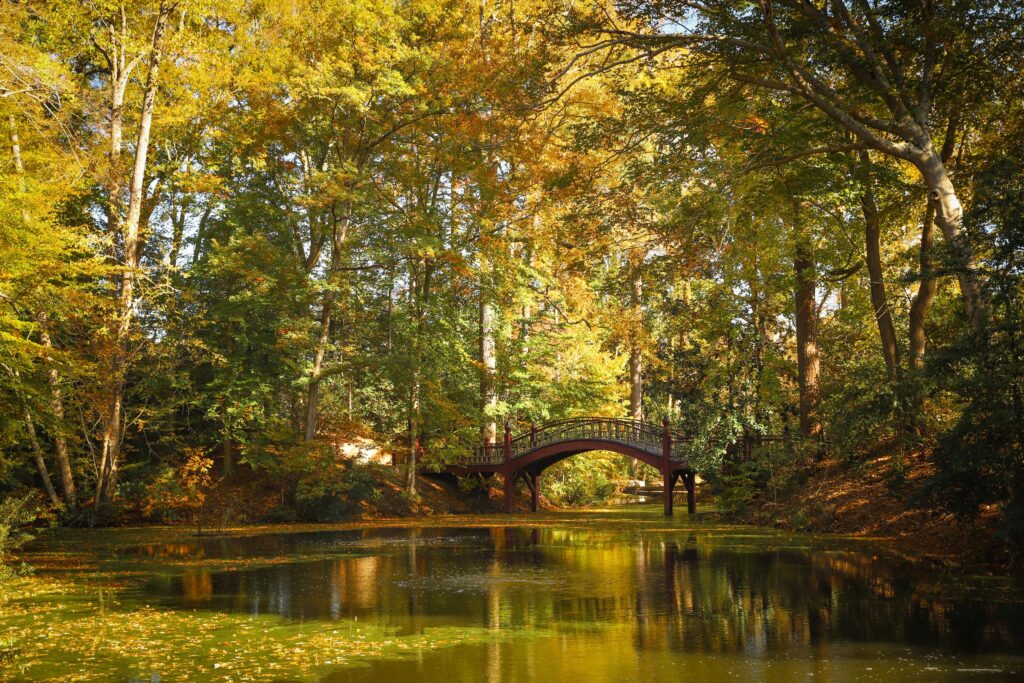
October is a favorite time of year for many people. The heat of summer has given way to cooler evenings and crystal-clear skies. Leaves begin to turn and fall.
The fruit has ripened and fallen. What remains on the branch is past its prime. Daylight recedes. There is beauty in the descent.
And perhaps this is why the word falling has been on my mind.
There comes a point when holding on is no longer life-giving.
The seasonal changes of light and darkness have been observed and honored by human beings for millennia. We participate in the turning of the year whether we consciously mark it or not. Nature seems to know something about letting go that human beings have such difficulty learning.
Something doesn’t have to become intolerable in order for its time to have passed. A job may still be comfortable and worthwhile, even when we have learned all that we can from it. A relationship may have given us something precious, even when its work in our lives is complete. A way of living may have nourished us for years and still be asking to change.
Something can be beautiful and still be finished. Something can be life-giving and still have served its purpose.
I think of my beloved whales. The blow of the grays in Saratoga Passage never gets old. I could watch them forever. And yet the whales migrate south.
There comes a time to go.
The difficulty, of course, is knowing when that time has arrived. Sometimes something becomes painful. Sometimes the life energy has simply begun to diminish. Nothing is necessarily wrong, yet what once brought joy no longer holds us in quite the same way. There may be an embodied sense that we are being nudged onward.
The danger may not be holding on itself, but holding on past the moment of potential transformation.
This is where I find depth psychology helpful. I am not only asking what needs to be released. I am asking whether there is an archetypal energy whose time has come to step aside—to withdraw from the foreground and allow something else to emerge.
What happens when something that has organized my life is no longer organizing it in the same way?
Does the archetype disappear?
I don’t think so. Perhaps what changes is our relationship to it.
An archetype that once carried our development can become an inner resource rather than the identity through which we primarily live. We may need to relinquish our identification with it without abandoning what it gave us.
I have been living with this realization through Artemis.
For more than twenty-five years, the south end of Camano Island served as hunting grounds for Artemis, the Greek goddess of the woodlands. She was a great huntress who chose the wilderness over domestic life, moving freely through the forests and mountains in the company of her nymphs.
Although I did not literally hunt, I lived alone in the woods and deliberately left the wildness wild. Only the area immediately around my house was gardened and groomed. We are never one pure archetypal force, after all, but Artemis was unmistakably predominant.
She knew the woods. She carried a bow. She moved according to her own rhythms. For me, the solitude of the forest became my sanctuary.
This time of year I would be stacking wood in preparation for the colder days ahead. I loved the physicality of it—the chopping, carrying, stacking. There is a rhythm to stacking wood and an art form to the woodpile itself.
Only later did I recognize how deeply this resonated with my ancestry. While visiting female relatives in Estonia, I saw a distant family member’s long woodpile, beautifully and almost perfectly stacked. Unlike mine, it wasn’t going to fall over. I was struck by the recognition. Without consciously knowing it, I had been enacting something ancestral when I chopped and stacked my own wood. The woodpile had a deep resonance in me before I understood why.
The woods gave me something I needed. They gave me solitude from cultural expectations and roles that did not nourish me. They gave me a place to go deep.
During my doctoral work, that solitude was especially generative. I read by the fire, wrote essays back to back, and immersed myself in ancient wisdom traditions, mythology, and depth psychology. The forest became something of a cocoon in which I could discover the depths of my being. And yet, transcendence no longer holds.
Artemis served me profoundly.
There came a time, however, when I began to sense that Artemis had done her work in me and through me. What had once been a sanctuary and a way of life became isolating. And perhaps I had held onto Artemis beyond what was useful.
Artemis is a maiden goddess. She is young and vibrant. She carries her bow and moves freely through the wilderness. She does not age.
I do.
There is something uncomfortable in that difference.
I am now in the later years of my life, and I am no longer simply the woman who needs to retreat into the woods in order to find herself. I am also squarely in the role of Teacher. Artemis taught me how to be a student—to go deeply, to seek, to study, to listen inwardly. Perhaps there are other forms of wisdom that now want my attention.
One of them may be Athena.
I had not thought much about Athena when I first moved to Williamsburg. But one of the great gifts of this place has been discovering that I can walk to William & Mary. The university is woven into the city, and the city is woven around it. William & Mary was founded in 1693, making it the second-oldest college in the United States, and its Wren Building, begun in 1695, is the oldest college building still standing in the country. The historic campus is Georgian in character, with later buildings in the Georgian Revival tradition.
I walk among the old buildings and the centuries-old trees. I can walk to the university library and, quite literally, walk into another world of books, scholarship, archives, manuscripts, maps, and rare books. Swem Library and its Special Collections Research Center hold the kinds of resources that speak directly to the part of me that has always wanted to research, inquire, and understand.
There is something about being here that feels like an unexpected meeting of archetypal worlds.
The historic district of Williamsburg feels remarkably unlike a modern city. The 18th-century character has been carefully restored and preserved: arboretum expanses, gardens, endless brick walks, old trees, and buildings that have a coherent vision. There is a low, human scale to the place, with much of its history still visible in the architecture and landscape. William & Mary brings the life of the mind into the middle of it. Aphrodite’s gardens and Athena’s realm of intellect seem to meet throughout the city.
Perhaps this is part of what I am learning now.
Artemis gave me the wilderness and the solitude in which I could become a student. But she gave me more than that. She gave me a protected space in which a life could be taken apart and slowly put back together—a place to heal from a marriage that had ended, from dreams that had not unfolded as I imagined, and from the losses that accompany significant change. In that protected space, I could listen, study, and discover what remained when some of the old structures had fallen away.
Athena may be asking something different. Her realm is not retreat from the world, but engagement with it through thought, study, discernment, and wisdom. What was cultivated in Artemis’s wilderness may now need to find its way into the polis—to be tested in conversation, brought into relationship, and placed in service of something beyond the self. And perhaps Aphrodite belongs here as well: not simply as desire or beauty, but as the force that draws us toward relationship, connection, and a growing need for a community of like-minded souls.
Today I live in a beautiful, cultivated town. There are formal gardens, geometric box gardens, herbs, continual blooms, breathtaking green walks, and a sense of history everywhere. The beauty is refined, planned, tended, cultivated.
It feels to me like Aphrodite’s gardens.
This is not a better beauty than the woods. It is a different kind of beauty.
The woodland gave me depth, solitude, wildness, independence. The garden invites cultivation, refinement, sensuality, pleasure, community, relationship, beauty, and receiving. Athena adds another dimension: the life of the mind, the pleasure of inquiry, the library, the university, the long conversation with ideas and with those who have thought before us.
Perhaps I am being invited into a life that can hold all three.
Not Artemis or Athena or Aphrodite, but a different relationship among them.
And yet the next archetype has not arrived.
That is the strange juxaposition in which I find myself.
The old life has not disappeared, nor do I want it to. The new life is beautiful, but I have not yet fully inhabited it. There is an interval between what has been and what has not yet arrived.
We often speak about transformation as though the sequence were simple: let go, and something new appears.
But sometimes it is more like this: let go, nothing, wait, not knowing, and eventually perhaps something emerges. That is if we can resist the tempation to fill the gap with distractions or hasty decisions.
This interval can be difficult. There is a grieving that needs to happen in the letting go, the falling. The ego wants stability. It wants to know what comes next. It wants to replace one identity with another so that we can feel settled again.
But perhaps there is another possibility.
Perhaps I don’t need to decide what needs to fall away. Perhaps I need to become quiet enough to recognize what is already falling.
That is different.
It leaves room for discernment. It leaves room for grief. It leaves room for the possibility that nostalgia is carrying information.
When I miss Camano, what exactly do I miss? The woods? The physical work? The woodpile? The solitude? The ancestral connection? The simplicity? The depth?
Perhaps I am not meant to recreate the old life. Perhaps I am being asked to discover which qualities of that life need to come with me.
The woodland, after all, is still there.
Behind my home is a strip of woods where deer wander, coyotes pass, hawks circle, and foxes appear. Artemis has not disappeared. I have not betrayed her by moving into the garden.
Perhaps I am simply learning to have a different relationship with her.
Can I love Artemis without needing to be Artemis?
Can I visit the woods without needing to live in them?
Can something that once organized my life become something I carry within me rather than something I must continually enact?
This is where falling begins to feel less like loss and more like a change in relationship.
The leaves do not cease to belong to the tree because they fall. The fruit does not become lesser because it falls. Falling is part of fulfillment.
Perhaps the same is true for us.
There comes a point when holding on is no longer life-giving.
But letting go is not always a decisive act. Sometimes it is a gradual loosening. Sometimes we release something and then reach back for it. Sometimes we grieve what we know was right to leave.
We can love what is passing without requiring it to remain.
And perhaps this is one of the deeper teachings of autumn: not to force the falling, not to decide too quickly what must go, and not to rush toward whatever comes next, but to participate in the turning.
Something that once organized my life is no longer organizing it in the same way.
Something is falling away.
Something new has not yet arrived.
And as I contemplate, I find myself easing into the not knowing.
Perhaps this is where I am meant to be for now: standing at the threshold, feeling the turn, loosening my grip, and making room for whatever wants to emerge.

Anne Taylor, Ph.D.
Kundalini Yoga • Jungian Depth Psychology • Mythology • Contemplative Practice